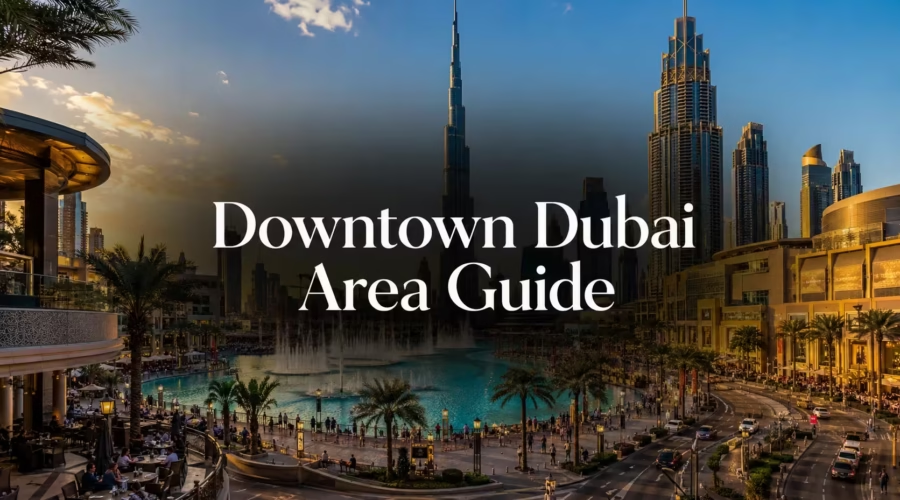
Downtown Dubai Area Guide: An Insider’s Complete Guide to the Heart of the City
Downtown Dubai is the flagship district developed by Emaar Properties along Sheikh Zayed Road, anchored by Burj Khalifa, The Dubai Mall, Burj Khalifa Lake, the Dubai Fountain, Dubai Opera, and Souk Al Bahar. Bordered by Business Bay and DIFC, the district connects via the Burj Khalifa/Dubai Mall Metro Station on the Red Line, linked to The Dubai Mall by the covered Metro Link Bridge. This guide covers Downtown Dubai from a local expert’s perspective: Burj Khalifa observation deck timing, hidden viewpoints for the Dubai Fountain, family and couple itineraries, dining at Souk Al Bahar and Address Downtown, hotel comparisons between Address Downtown, The Palace, and Vida Downtown, residential towers including South Ridge, Boulevard Point, 29 Boulevard, and Old Town Island, property investment insights, RTA transport routes, and the everyday local business ecosystem. Built for tourists, families, couples, expats, property buyers, and investors planning their Downtown Dubai experience.
Downtown Dubai is the district built around Burj Khalifa, The Dubai Mall, and the Dubai Fountain, developed by Emaar Properties along Sheikh Zayed Road between Business Bay and DIFC. I have spent the last twenty years living inside this district, walking its boulevard before sunrise, guiding first-time visitors through it on their busiest travel day, and watching it grow from a construction site into the most photographed square kilometer in the Middle East. This guide answers what people actually need to know before they arrive, not what a brochure wants them to believe.
If you searched “Downtown Dubai Area Guide,” you are probably in one of six situations: planning a first Dubai trip, building a family itinerary, planning a couple’s getaway, considering a move here as an expat, weighing a property purchase, or hunting for a specific restaurant, hotel, or local business. I have guided people through every one of these situations, and this guide is structured to answer each of them directly.
| Attribute | Detail |
|---|---|
| Destination | Downtown Dubai, flagship district of Dubai |
| Developer | Emaar Properties |
| Nickname | “Center of Now” / Heart of Dubai |
| Location | Along Sheikh Zayed Road (E11), Financial Centre Road (D71) forms northeastern edge |
| Bordering Areas | Business Bay (south), DIFC (northeast), Al Wasl (west) |
| Signature Landmark | Burj Khalifa, 828 m, world’s tallest building |
| Total Core Attractions | 6 landmark sites |
| Best Season | November to March |
| Avoid | Peak midday heat, April to October (outdoor spots only; indoor attractions unaffected) |
| Entry Requirement | UAE visa or GCC ID; no special permit needed |
| Old Town Heritage Age | Completed 2006, traditional Arabesque architecture |
Where Downtown Dubai Is and Why Its Layout Matters
Downtown Dubai sits directly off Sheikh Zayed Road (E11), with Financial Centre Road (D71) forming its northeastern boundary. Business Bay borders it to the south, DIFC to the northeast, and Al Wasl sits across Sheikh Zayed Road to the west. What most guides do not explain is why this layout matters practically: Emaar built Downtown Dubai as one continuous pedestrian spine, Emaar Boulevard and Sheikh Mohammed bin Rashid Boulevard, connecting Burj Khalifa, The Dubai Mall, Burj Khalifa Lake, Dubai Opera, and Souk Al Bahar into a single walkable loop. Almost nowhere else in Dubai can you cover this many landmarks without a car. I tell every first-time visitor this on day one, because it changes how they plan their entire trip.
Top Attractions, Explained by Someone Who Has Watched Every One of Them a Thousand Times
Burj Khalifa is the tallest building in the world at 828 meters, and its observation decks sit at level 124/125 (At the Top) and level 148 (At the Top SKY). The insider mistake almost everyone makes: booking the sunset slot without checking the actual sunset time for their travel month. In December, sunset is around 5:30pm; in July, it is closer to 7:15pm. Book your slot 30 to 45 minutes before actual sunset, not by guessing a “typical” evening time. According to the official Burj Khalifa website, tickets are timed-entry and non-transferable, and pre-booking at least a few days ahead is strongly recommended during the November to March high season.
My local tip: the SKY level (148) is worth the upgrade only if you are visiting during clear, low-haze conditions, typically after rain or in the cooler months. During Dubai’s hazier summer months, the view difference between level 125 and 148 is minimal, and I tell budget-conscious visitors to save the difference.
The Dubai Mall connects directly to Burj Khalifa’s base and holds the Dubai Aquarium & Underwater Zoo, an Olympic-size ice rink, and Kidzania. Most tourists treat it as a shopping stop and miss that it is also the best air-conditioned refuge during peak summer heat, when outdoor plans fall apart by 11am.
The Dubai Fountain performs on Burj Khalifa Lake at regular intervals through the evening. The mistake I see constantly: tourists cramming onto the main viewing bridge directly in front of Burj Khalifa. The better vantage point, and the one I give every guest, is the Souk Al Bahar waterfront, where you get the same show with a fraction of the crowd and the option to sit down for dinner while you watch.
Dubai Opera hosts opera, ballet, and concerts inside a building shaped like a traditional dhow. Even if you are not attending a show, the plaza around it is one of the quietest spots in the entire district after 9pm, when the mall crowds have thinned out.
Souk Al Bahar is a small, traditional-style souk directly across the lake from The Dubai Mall. This is where I send anyone who tells me they are “tired of malls.” It has the same lake view, real Arabian architecture, and a noticeably calmer pace.
Burj Park is a landscaped green space near Burj Khalifa’s base. Locals use it for morning walks before the heat sets in; tourists rarely find it because it is not inside the mall complex.
Attractions At a Glance (Free vs. Paid)
| Attraction | Entry Cost | Hours | Paid Add-Ons |
|---|---|---|---|
| Dubai Fountain (boardwalk view) | Free | Evening shows on schedule, daily | None; Souk Al Bahar dining optional |
| Emaar Boulevard / SMBR Boulevard | Free | Open 24/7 | Café and retail spending |
| Burj Park | Free | Daily, open access | None |
| Souk Al Bahar (browsing) | Free | Daily, store hours vary | Shopping, waterfront dining |
| The Dubai Mall (browsing) | Free | 10 AM–12 AM (varies by day) | Aquarium, ice rink, Kidzania, cinema |
| Burj Khalifa At the Top (Floors 124–125) | Paid | Non-prime from 9 AM; prime 4–7 PM; evening to midnight | AED 169–250 standard; AED 224–250 sunset |
| Burj Khalifa At the Top SKY (Floor 148) | Paid | Same as above, dedicated slots | AED 369–554 |
| Dubai Opera (performances) | Paid | Show-dependent | Ticket price varies by event |
| Old Town Island (self-guided walk) | Free | Daylight hours | Photography services optional |
Related Post: Business Bay Area Guide Dubai
The Hidden Spots Most Visitors Never Find
After twenty years here, the places I actually recommend to guests looking for something beyond the obvious circuit:
- The upper-level walkway inside The Dubai Mall facing the fountain, one floor above the crowded ground-level viewing area, gives you the same fountain view with almost no crowd.
- Old Town Island, the low-rise Arabesque-style residential pocket behind Souk Al Bahar, is where I take people who want photos that do not look like every other Downtown Dubai photo online. If you want a professional session there instead of relying on your phone, I usually point visitors toward local photographers through InstPhotos, who know the exact angles that work best with the afternoon light.
- Early morning, before 8am, Emaar Boulevard is nearly empty and the light on Burj Khalifa’s glass facade is the best of the entire day. This is the single most underused window in the whole district.
Building the Right Itinerary for Who You Are
First-time visitors with one day: Burj Khalifa in the late afternoon to catch daylight and sunset in the same visit, The Dubai Mall in the early evening, dinner at Souk Al Bahar timed to a fountain show, then a walk along the boardwalk. This is the order I have refined over hundreds of guided days, and it works because it moves you from indoor air conditioning to outdoor evening comfort as the temperature drops.
Families: Front-load Kidzania and the aquarium in the morning when children have the most energy, keep Burj Khalifa for a late afternoon slot when queues are shorter, and treat the fountain show as the evening’s finale rather than the centerpiece, since younger kids often lose patience waiting for a specific showtime. Downtown Dubai itself has few schools, so families relocating here for the long term usually rely on nurseries within their building and commute a short distance for formal schooling, a detail almost no guide mentions clearly.
Couples: Skip the daytime Burj Khalifa rush entirely and book the sunset slot as your one paid attraction, then spend the rest of the evening at a Souk Al Bahar waterfront table. This is consistently the highest-rated experience among couples I have guided, more than any single paid activity in the district.
Two-day visitors: Add Dubai Opera and a slower morning at Old Town Island and Burj Park to the standard one-day route.
Restaurants and Where Locals Actually Eat
Downtown Dubai’s dining splits into three real tiers, and knowing which one you are choosing saves both money and disappointment.
Fine dining with fountain views clusters along the Souk Al Bahar waterfront and inside Address Downtown. Reservations here fill fast in high season, and if you want a specific fountain-facing table, call ahead rather than relying on a walk-in.
Mid-range international dining is concentrated inside The Dubai Mall, and this is where most visitors default without realizing prices there run higher than equivalent restaurants a short walk away on the boulevard.
For genuinely local, lower-cost options, the boulevard-level cafés away from the mall entrances are consistently cheaper for the same quality, a fact almost no visitor discovers on their own because the mall pulls all the foot traffic.
Also Explore: Dubai Marina Area Guide
Shopping Beyond The Dubai Mall
The Dubai Mall remains the district’s shopping anchor, with a dedicated Fashion Avenue wing for luxury brands. But I always tell guests that Souk Al Bahar is the better stop for actual souvenirs and gifts, since its vendors sell rugs, textiles, and handicrafts you will not find inside the mall’s international retail mix. If you are staying longer and want to shop online instead of fighting mall crowds, Noon UAE covers most of what The Dubai Mall sells at a fraction of the walking. And for a small but specific example of the district’s specialty retail scene, shops around the boulevard stock niche products like nicotine pouches in Dubai for residents who prefer not to trek to a supermarket for them.
Hotels: What the Star Rating Doesn’t Tell You
Address Downtown and The Palace Downtown sit closest to Burj Khalifa Lake and command the highest rates, largely for direct fountain views. Vida Downtown offers a genuinely comparable experience at a lower price point, positioned closer to Souk Al Bahar rather than the lake’s main bridge, and I recommend it constantly to guests who want the location without the premium.
The mistake I see repeatedly: booking a “Downtown Dubai” hotel without confirming the actual view category, since standard rooms in nearly every property here do not guarantee a Burj Khalifa or fountain view unless specifically requested and often paid for as an upgrade.
For longer stays, serviced apartments throughout the district offer kitchen facilities at meaningfully lower nightly rates than comparable hotel rooms, and this is the option I steer expats and extended business travelers toward almost by default.
Living in Downtown Dubai: The Expat and Resident Perspective
Downtown Dubai’s residential stock is almost entirely freehold high-rise towers, meaning both UAE nationals and foreign buyers can hold full ownership. Buildings closest to Burj Khalifa Lake, including South Ridge, Boulevard Point, 29 Boulevard, and Burj Vista, command the highest per-square-foot pricing, with rates easing moderately toward the district’s edge near Business Bay.
Old Town Island, completed in 2006, is the district’s low-rise alternative: 35 buildings across six sub-districts (Yansoon, Reehan, Zafaran, Miska, Zanzabeel, and Kamoon), built in a traditional Arabesque style with mashrabiya balconies. It is quieter than the glass towers and popular with residents who want Downtown’s location without high-rise living.
If you are relocating and considering a shared apartment rather than committing to a full lease immediately, checking a platform like RoomieFinder before signing anything is worth the extra day, since Downtown Dubai’s rents are among the highest in the city and splitting a unit meaningfully changes the math.
A candid resident’s assessment: this is not where you move for value. Groceries, parking, and everyday services all run higher here than in most other Dubai districts. You pay for the walkability, the skyline, and the lifestyle, not for affordability. I tell every prospective resident this directly, because the ones who move here expecting Business Bay pricing are always disappointed within the first month.
Buying Property in Downtown Dubai: What Investors Actually Ask Me
Downtown Dubai has consistently ranked among Dubai’s most active districts for apartment sales, driven by steady demand from both long-term tenants and short-term holiday-home guests drawn by the same landmark density that pulls in tourists. That dual demand is the core of the investment case here: a unit that works as a long-term rental also works as a short-term holiday rental, which is rarer than most buyers assume.
The questions I get most from first-time investors: is it overpriced, and what is the actual yield. Neither has a single answer, it depends heavily on the building, floor, and view category, which is exactly why I never let a client commit without a proper valuation and mortgage structure in place first. For financing specifically, I usually point serious buyers toward a broker who can actually walk through the numbers, and Lion Mortgage Consultants is one I have referred clients to directly for this exact conversation. On the agency side, if you want someone who knows the building-by-building pricing differences in this district specifically rather than Dubai generally, Shoayb Khattab is a name I trust for that level of local detail.
Transportation: How to Actually Move Through Downtown Dubai
The Burj Khalifa/Dubai Mall Metro Station on the Red Line is the district’s primary transit link, connecting directly to Business Bay, Dubai Marina, and the wider city network. According to the RTA’s own service information, a covered, air-conditioned pedestrian bridge, the Metro Link Bridge, connects the station directly to The Dubai Mall, making the walk usable even in peak summer heat.
RTA bus routes serve stops around Dubai Mall Landside, with route 27 running between the Gold Souq and Dubai Mall and feeder route F13 serving the metro station directly. Taxis and ride-hailing apps are reliably available throughout the district, with wait times typically under ten minutes outside peak hours, and licensed pink-roofed taxis are available for women and families who prefer them.
My honest transport advice, after two decades of watching visitors get this wrong: never drive into The Dubai Mall’s vehicle entrances during evening or weekend peak hours. Park further out or take the metro instead. The traffic bottleneck around the mall’s main entrances is the single most predictable frustration point in the entire district.
Transport Cost Comparison (Getting To and Around Downtown Dubai)
| Method | Cost | Duration (from Dubai Airport/Marina) |
|---|---|---|
| Dubai Metro (Silver Nol, Red Line) | AED 3–7.50 per journey (zone-based) | ~25–35 min from Airport Terminal 1/3; ~30 min from Marina |
| Dubai Metro (Red Nol, single-use tourist ticket) | AED 2 + fare | Same as above |
| Dubai Metro (Gold Class) | Double Silver fare (AED 6–15) | Same as above |
| Nol Silver Card (issuance) | AED 25 (AED 19 credit + AED 6 card) | One-time purchase |
| RTA Bus (feeder F13 / Route 27) | Standard bus fare, zone-based | Varies |
| Taxi/Ride-hailing (Uber, Careem) | Metered, wait under 10 min typically | 15–30 min depending on origin |
| Walking within Downtown Dubai | Free | 10–15 min between core landmarks |
The Local Business Ecosystem
Beyond the landmarks, Downtown Dubai runs on a dense layer of everyday services that residents rely on constantly: supermarkets along the boulevard, medical clinics and pharmacies inside residential tower podiums, gyms and wellness studios (many inside hotel properties offering day passes to non-guests), and a concentration of real estate agencies given how active this district is for both sales and rentals. If you run a salon or spa here and are trying to actually get found by the residents and tourists passing through daily, working with a specialist like the Salon Spa Marketing Agency in Dubai is the kind of local move I have seen make a real difference for small operators competing against the hotel-based wellness brands.
Common Mistakes Tourists Make in Downtown Dubai
Notable Exceptions & Corrections
| Item | Status |
|---|---|
| Burj Khalifa “At the Top” standard ticket | Not free; commonly assumed cheaper than it is (AED 169+ minimum) |
| Dubai Fountain main bridge viewpoint | Free but overcrowded; Souk Al Bahar side is the better free alternative |
| Downtown Dubai schools | Limited within district; often incorrectly assumed to be well-served |
| Hotel “Burj Khalifa view” rooms | Not guaranteed by standard booking; requires specific request/upgrade |
| Dubai Trolley (Sheikh Mohammed bin Rashid Boulevard) | Currently inactive, despite still appearing in older guides |
| Old Town Island | Frequently overlooked; mistaken as separate from Downtown Dubai rather than part of it |
After guiding thousands of visitors through this district, the mistakes repeat almost identically:
Booking Burj Khalifa without checking the actual sunset time for their travel month, and ending up with a slot that misses it entirely.
Assuming one viewing spot for the Dubai Fountain, the main bridge, when the Souk Al Bahar side offers a far calmer experience with dining built in.
Driving into the district during evening peak hours instead of using the metro, then losing 30 to 45 minutes to traffic that a five-minute metro ride would have avoided.
Not confirming their hotel room’s actual view category before arrival, then being surprised by a room that faces another tower instead of Burj Khalifa or the fountain.
Treating The Dubai Mall as the only shopping option and never crossing the lake to Souk Al Bahar, missing the district’s more distinctive retail experience entirely.
Best Time to Visit and Realistic Budget Expectations
November through March is Downtown Dubai’s peak season, when outdoor spaces like the boardwalk and Burj Park are genuinely comfortable and the fountain shows draw their largest crowds. April through October brings serious heat, but the district handles it better than most of Dubai because so much of it, the mall, Burj Khalifa’s decks, Dubai Opera, is fully climate-controlled.
Free experiences: the Dubai Fountain from the public boardwalk, Emaar Boulevard, Burj Park, and browsing Souk Al Bahar. Paid experiences scale sharply by tier: a standard Burj Khalifa ticket sits at a moderate fixed price, the SKY level and sunset slots cost more, and dining ranges from mall food-court pricing to premium fountain-view tables that run several times higher. Hotel rates follow the same pattern, with lakeside properties commanding a clear premium over rooms a short walk further away.
Frequently Asked Questions
Where is Downtown Dubai located? Downtown Dubai is located along Sheikh Zayed Road, bordered by Business Bay to the south and DIFC to the northeast.
Is one day enough to see Downtown Dubai? One day covers the core landmarks well: Burj Khalifa, The Dubai Mall, and a Dubai Fountain show. Two days allow a more relaxed pace, an Opera visit, or time in Old Town Island.
What is the best time to visit Burj Khalifa? Book your Burj Khalifa slot 30 to 45 minutes before the actual sunset time for your travel month, not a generic evening time, since sunset shifts by nearly two hours between December and July.
Where is the best place to watch the Dubai Fountain for free? The Souk Al Bahar waterfront offers the same fountain view as the main bridge with noticeably smaller crowds, plus the option to dine while watching.
Is Downtown Dubai good for families? Yes for attractions, with Kidzania, the aquarium, and the ice rink, though the district itself has few schools directly within it, so most families rely on nurseries locally and commute short distances for formal schooling.
Is Downtown Dubai walkable? Yes. Burj Khalifa, The Dubai Mall, Souk Al Bahar, Dubai Opera, and Burj Park all sit within roughly a 10 to 15 minute walk of each other along the boulevard and lakeside promenade.
What is the nearest metro station to Downtown Dubai? The Burj Khalifa/Dubai Mall Metro Station on the Red Line, connected to The Dubai Mall by the covered Metro Link Bridge.
Is Downtown Dubai expensive to live in? Yes, it is one of the highest-cost districts in Dubai for both rent and everyday expenses like groceries and parking. Residents pay for the location and lifestyle rather than value.
Are there budget hotel options in Downtown Dubai? Vida Downtown offers a genuinely comparable location to Address Downtown at a lower price point, and serviced apartments outperform hotel rooms on value for longer stays.
What areas border Downtown Dubai? Business Bay to the south, DIFC to the northeast, and Al Wasl across Sheikh Zayed Road to the west.
Final Word From Someone Who Has Never Stopped Exploring This District
Twenty years in, Downtown Dubai still surprises me, usually in the small windows most visitors never plan for: the empty boulevard at 7am, the upper-floor mall view of the fountain nobody queues for, the quiet plaza outside Dubai Opera after the evening rush has moved on. The landmarks bring people here. The details are what make them come back.