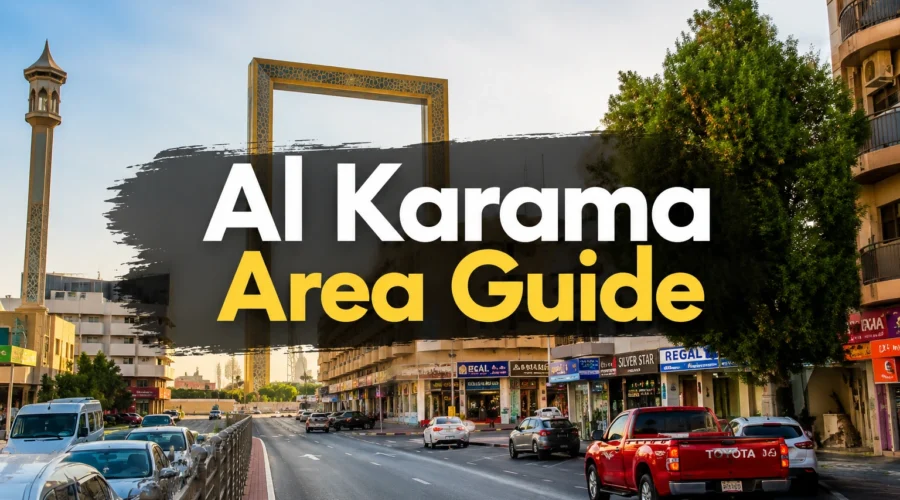
Al Karama Area Guide: Local Expert Guide to Dubai’s Most Central Neighbourhood
Al Karama, Dubai is one of the city’s oldest and most densely populated residential districts, located in Bur Dubai along the western banks of Dubai Creek between Umm Hurair and Zabeel Park. Known for Karama Market’s bargain shopping, an unmatched South Asian, Filipino, and Arabic food scene, and strong Dubai Metro access via ADCB and BurJuman stations, Al Karama offers affordable studio, one, two, and three-bedroom apartments in established mid-rise buildings such as Carrera Building. The district sits close to Zabeel Park, Dubai Frame, BurJuman Mall, and Al Fahidi Historical District, with schools, nurseries, hospitals, and everyday amenities all within easy reach. This guide covers Al Karama’s location, transport, rental market, restaurants, shopping, hotels, healthcare, and how it compares with nearby Bur Dubai, Oud Metha, and Deira, giving tenants, investors, tourists, and business owners a complete, practical picture of everyday life in one of Dubai’s most central and authentic neighbourhoods.
Al Karama is a residential and commercial district in Bur Dubai, sitting on the western banks of Dubai Creek between Umm Hurair to the north and Zabeel Park to the south. It is the most densely populated residential district in Dubai, home to around 75,560 people within roughly 1.5 square kilometres, and one of the oldest, planned in the 1970s and 1980s on a strict grid of numbered streets. Al Karama Dubai is known for budget shopping, an unmatched South Asian, Filipino, and Arabic food scene, and a community feel that newer, master-planned parts of the city simply do not replicate.
This guide covers Al Karama from every practical angle: location, transport, apartments and rent, shopping, food, hotels, schools, healthcare, and who the area genuinely suits, written for anyone deciding whether to visit, rent, buy, invest, or open a business here.
What Is Al Karama and Where Is It Located?
Al Karama, or simply Karama, is a residential district of Dubai located in Bur Dubai, on the western side of Dubai Creek. The name comes from the Arabic word meaning dignity, and it reflects the district’s identity as one of Dubai’s original working-class residential communities.
The district stretches around two kilometres between Umm Hurair 1 in the north (a diplomatic area with several consulates) and Zabeel Park in the south, a technology-themed public park that opened in 2005. Zabeel Park separates Karama Dubai from the Dubai World Trade Centre and the Sheikh Zayed Road skyline. The western boundary runs along Sheikh Khalifa Bin Zayed Street, also called Trade Centre Road, where BurJuman Mall sits at the edge of the district. To the east, Al Karama borders Oud Metha; to the north-west it edges toward Al Mankhool.
Within the wider district, several sub-areas are commonly referenced by residents and estate agents, including Karama Centre (the commercial core near the ADCB Metro Station) and Sheikh Hamdan Colony, a residential pocket named after the building cluster that anchors it locally. These sub-areas are not separate administrative zones but help orient newcomers within the grid.
Al Karama vs Al Karama in Ajman: An Important Distinction
Search results for “al karama” sometimes surface a different location entirely: Al Karama in Ajman, a separate residential area in the emirate of Ajman, roughly 30 to 40 minutes from Dubai depending on traffic. It is not connected administratively, geographically, or by metro to Al Karama Dubai, and the two should not be confused when researching rent, schools, or transport. This guide covers Al Karama, Dubai exclusively.
Location and Accessibility
Al Karama’s central position is its single biggest practical advantage. Main roads including Sheikh Rashid Road, Sheikh Khalifa Bin Zayed Street, and Kuwait Road frame the district and connect quickly into Sheikh Zayed Road, keeping Downtown Dubai and Business Bay within easy reach by car or metro.
Al Karama sits close to several major districts, each useful for comparison depending on what a visitor or resident needs:
- Bur Dubai: Al Karama is technically part of Bur Dubai, but within the wider area it stands out for its residential density and market culture specifically, compared with the more heritage-focused streets around Al Fahidi.
- Oud Metha: directly adjacent to the east, home to Rashid Hospital and several private schools, and often considered together with Karama when comparing rental options.
- Deira: across the Creek, sharing a similar working-class, market-driven character, though Al Karama sits closer to the Red Line’s central stations.
- Downtown Dubai: roughly ten minutes away by car or metro, offering new-build towers and skyline views at a significantly higher price point than Karama’s older apartment stock.
Dubai International Airport is approximately a fifteen-minute drive under normal traffic conditions, though this varies with time of day. For official, up-to-date routing and journey planning, residents and visitors can check the Dubai Roads and Transport Authority directly, since traffic conditions and route options change over time.
Getting to and Around Al Karama
Which metro station serves Al Karama? Two stations serve the district directly. ADCB Metro Station sits on the Red Line, centrally located at the intersection of Sheikh Khalifa Bin Zayed Road and 33rd Street. It opened in April 2010 as Al Karama Metro Station and was renamed in 2014 following a sponsorship agreement with Abu Dhabi Commercial Bank, though many long-term residents still call it by its original name, and it is still sometimes referred to informally as Karama ADCB. BurJuman Metro Station sits at the district’s northern edge and is one of only two stations in the entire Dubai Metro network where the Red and Green Lines interchange, the other being Union Station. This makes onward travel from Karama genuinely fast, since most parts of the city are reachable with at most one transfer.
Bus connectivity runs deep through the district. Al Karama Bus Station functions as a central hub linking commuters to routes across Deira, Satwa, and Jumeirah, and several RTA services stop directly along Sheikh Khalifa Bin Zayed Street near the Karama Centre shopping blocks.
By road, parking is more competitive than in newer Dubai communities. Many mid-rise buildings offer basement or covered parking for residents, while visitors typically rely on paid RTA street parking, which fills quickly in the evenings near Karama Market and the restaurant strips. Traffic tends to build at the Kuwait Street and BurJuman junctions during peak commuting hours, a realistic consideration for anyone weighing a daily drive out of the district.
Approximate Travel Times from Al Karama
| Destination | Typical Journey Time |
|---|---|
| Downtown Dubai | Around 10 minutes by car or metro |
| Dubai International Airport | Around 15 minutes by car |
| BurJuman Mall | A few minutes’ walk |
| Zabeel Park | A few minutes’ walk |
| Dubai World Trade Centre | Around 10 minutes |
| Dubai Marina | 30 to 35 minutes depending on traffic |
These figures are approximate and can vary meaningfully with time of day; they should not be treated as guaranteed.
Living in Al Karama: Lifestyle and Community
Life in Karama moves at street level. Ground-floor units across the district house tailoring shops, small restaurants, pharmacies, and grocers, and daily life plays out on the pavement as much as indoors, neighbours greeting each other outside shops, ground-floor cafés doubling as informal meeting points. The district’s population has traditionally been dominated by South Asian and Filipino expatriates, and this has shaped its food, retail, and social rhythm more than almost any other neighbourhood in Dubai.
Karama Park, a compact local green space, functions as an everyday recreation spot for residents, popular for casual cricket games and evening walks, distinct from the larger Zabeel Park just beyond the district’s southern edge.
Who Al Karama Is Best Suited For
- Professionals and singles who want a short, metro-accessible commute to DIFC, Downtown, or Business Bay without Downtown-level rent.
- Small families who prioritise proximity to Zabeel Park, affordable schooling, and everyday amenities over new-build amenity packages.
- Budget-conscious residents and students wanting the lowest realistic rent within a genuinely central location.
- New expats, particularly from South Asia or the Philippines, who want an established community with familiar food, language, and services already in place.
Who May Prefer a Different Area
- Residents who expect in-building amenities such as gyms, pools, or covered parking as standard.
- Families wanting a quieter, low-density, greenery-first residential feel, better served by suburban communities further from the centre.
- Anyone highly sensitive to traffic congestion or street-level noise during peak hours.
Apartments and Rent in Al Karama
Al Karama’s residential stock is dominated by mid-rise buildings, typically five to ten storeys, with ground-floor retail beneath residential units above. Studio apartments generally range from around 300 to 610 square feet, one and two-bedroom units from roughly 700 to 1,800 square feet, and larger three-bedroom apartments upward of 2,000 square feet, though exact sizes vary considerably by building age and layout. Older buildings tend to have separate kitchens and practical, boxier layouts rather than the open-plan designs common in newer Dubai towers; some have been renovated with modern fittings, while others retain original finishes, so unit condition should always be checked in person before signing.
Named residential and mixed-use buildings within the district include Carrera Building, a mid-rise freehold tower near Karama Park and Karama Centre offering mainly one and two-bedroom apartments alongside ground-floor commercial space, and Al Mabrooka, which includes amenities such as a swimming pool and a children’s play area, more unusual for the district’s older stock.
We do not quote specific current rent figures here, since prices shift with market conditions and vary by building age, floor, and renovation status. For live, verifiable numbers, cross-reference current listings on established portals or transaction data from the Dubai Land Department, which publishes official rental and sale transaction records for Dubai communities including Al Karama.
What Tenants Should Check Before Signing a Lease
- Whether the building offers covered or basement parking, given limited street parking availability.
- The age of air conditioning and plumbing systems in older buildings.
- Noise exposure, particularly for units facing Karama Market streets or main roads.
- Whether the quoted rent includes DEWA (utilities) registration support or if this is handled separately.
- The number of cheque instalments the landlord accepts, since this affects upfront cash flow.
Property Investment Considerations
Al Karama’s appeal to investors rests on consistently high rental demand driven by its central location and relative affordability compared with Downtown or Business Bay. It is not a high-growth, off-plan-driven market; Al Karama Dubai functions more as a stable, income-generating asset class than a capital-appreciation play. Investors should independently verify rental yield expectations against current transaction data rather than relying on generic affordability claims, and should factor in that older buildings may carry higher ongoing maintenance and service charge considerations than newer towers.
Things to Do in Al Karama
Dubai Frame sits at the edge of Zabeel Park, an easy walk or short taxi ride from the district. Its 150-metre structure offers panoramic views spanning both old and new Dubai from a single vantage point. Zabeel Park itself provides a lake, jogging paths, and shaded seating, a genuine green-space break from the density of the market streets, and Al Nasr Leisureland, a sports complex offering ice skating and bowling, sits nearby as a different kind of recreational option.
A newer, increasingly documented draw is the district’s street art. Over recent years, large-scale murals ranging from Arabic calligraphy to contemporary figurative work have appeared across several residential building walls and alleyways, transforming parts of the district into an informal open-air gallery, a walk that pairs naturally with a café stop and a browse through the market.
For heritage-focused visitors, Al Fahidi Historical District and Dubai Museum are both a short trip away, extending naturally from a Karama visit into Old Dubai more broadly. According to Visit Dubai, the official tourism authority, Al Karama is recognised specifically for its bargains, food, and local character among Dubai’s older neighbourhoods.
Restaurants and Food in Al Karama
Few districts in Dubai pack as much culinary density per square kilometre as Al Karama. Indian, Pakistani, Filipino, and Arabic restaurants sit side by side, often family-run, and consistently affordable. Paramount Restaurant, located near Karama Municipality on 12 D Street, is a long-running example of the district’s Kerala and South Indian dining scene, known for thali-style meals and casual, no-frills service. Along 35th Street, Najmat Al Karama is another established local eatery reflecting the everyday, unpretentious character of the area’s food strip.
This is where Dubai’s karak tea culture is strongest: small cafés serving spiced milk tea alongside samosas and parathas function as informal community hubs throughout the day. Street food is a genuine draw rather than an afterthought, and dessert spots and juice counters round out the scene. A number of eateries operate into the late evening, a practical reflection of the district’s shift-working population.
We have deliberately avoided listing specific ratings or pricing for individual restaurants here, since these change frequently; always check current reviews and menus directly before visiting.
Shopping in Al Karama
Karama Market, sometimes called Karama Souq, is the district’s retail identity. It is a dense grid of shopfronts selling clothing, accessories, perfumes, textiles, souvenirs, and gifts at prices well below Dubai’s mall culture, and bargaining is expected rather than optional. Karama Centre and Al Attar Shopping Mall sit near the ADCB Metro Station and add a more structured retail layer alongside the open-market stalls, while the Omani Souq offers a different, more traditional shopping experience focused on Omani goods. A short walk north, BurJuman Mall provides higher-end shopping and dining, giving the district a genuine range from street-level bargains to mall retail within a few minutes of each other.
Everyday needs are well served too. A LuLu Hypermarket branch sits near the Emirates Post office adjacent to Karama Park, and the district is dotted with nationality-specific supermarkets, including Pakistan Supermarket and Philippine Supermarket, reflecting the makeup of the local population as accurately as any demographic study could. Tailoring, alteration, and repair shops line many ground floors, a category of everyday business Al Karama is particularly known for.
Hotels and Accommodation in Al Karama
Al Karama offers a range of mid-range and budget-friendly hotels, a practical alternative to Downtown Dubai’s higher-priced options for travellers prioritising value and central access over skyline views. Named properties in the district include Park Regis Kris Kin Hotel, Ramee Royal Hotel, Regent Palace Hotel, President Hotel, and Fortune Karama Hotel, spanning three to four-star comfort levels, alongside serviced apartment options popular with extended-stay visitors and families.
Compared with staying in Downtown Dubai, Al Karama trades skyline views and five-star branding for lower nightly rates, walkable street life, and arguably easier access to authentic food and markets. For travellers whose priorities are budget and a metro-connected base rather than proximity to Burj Khalifa specifically, Karama is a genuinely competitive choice.
Schools, Healthcare, and Essential Services
Families weighing Al Karama against other communities usually ask about schooling and healthcare access first, and the district scores reasonably well on both fronts given its central position.
Schools and nurseries within a short distance include The Apple International Community School, Hemaya Schools for Girls, and Iranian Towheed School, alongside nurseries such as Kinderville Nursery, Chubby Cheeks Nursery, and British Orchard Nursery. Several well-regarded schools, including Indian High School Dubai and Lycee Francais International Prive de Dubai, sit within a short drive in neighbouring Oud Metha. For higher education, Al Dar University College is just across Dubai Creek, and Canadian University Dubai is reachable in around fifteen to twenty minutes along Sheikh Zayed Road.
Healthcare access is a genuine strength. Rashid Hospital and Metropolitan Medical Centre sit near Oud Metha Metro Station, American Hospital Dubai is nearby next to the Iranian Club, and Aster Hospital Mankhool and International Modern Hospital are both a short drive away. At the neighbourhood level, clinics including Aster Clinic Karama, New Apollo Polyclinic, and Right Health Karama Medical Centre mean most routine care needs are met without leaving the district.
Everyday services are dense and walkable: pharmacies, banks, and ATMs are common along the main commercial streets, and salons and personal grooming businesses are plentiful given the district’s retail density.
A Note on Postal Addressing in Al Karama
The United Arab Emirates does not use a conventional postal or ZIP code system. Mail in Al Karama, as across Dubai, is handled through Emirates Post’s P.O. Box network rather than street-based codes, and buildings are identified individually through the Makani smart addressing system, a unique ten-digit number assigned to each property. Online forms that require a numeric postal code typically accept a generic placeholder such as “00000,” but this is not an official postal code for the district, and residents and businesses needing reliable mail delivery should register a P.O. Box directly through Emirates Post rather than relying on any specific number found online.
Nearby Areas Compared
- Al Karama vs Bur Dubai: Al Karama is part of the wider Bur Dubai area but stands out specifically for its residential density and market culture, versus the more mixed commercial-heritage feel around Al Fahidi.
- Al Karama vs Oud Metha: Oud Metha, directly adjacent, leans slightly more institutional with its hospital and school density, while Karama leans more retail and residential.
- Al Karama vs Deira: Deira shares a similar working-class, market-driven character across the Creek, but Karama offers tighter metro access to Downtown and DIFC.
- Al Karama vs Downtown Dubai: Downtown offers new-build amenities and skyline views at a significantly higher price point; Karama offers comparable commute times at a fraction of the rent, without the amenity layer.
For anyone comparing Al Karama against other established Dubai communities, our guides to Bur Dubai, Downtown Dubai, and Al Barsha provide useful side-by-side context.
Pros and Cons of Living in Al Karama
Pros
- Central location with short commutes to Downtown, DIFC, and Business Bay
- Strong public transport coverage via ADCB and BurJuman metro stations
- Exceptional food diversity at affordable prices
- Dense, walkable shopping and everyday amenities
- Comparatively affordable apartments for such a central address
- Established, long-term community feel
Cons
- Traffic congestion at peak hours near key junctions
- Limited and competitive parking, especially for visitors
- Older buildings in parts of the district, with variable renovation status
- Dense, busy streets that may not suit those wanting a quiet residential feel
- Fewer in-building amenities compared with newer Dubai communities
Business and Commercial Life in Al Karama
Beyond residential living, Al Karama supports a dense small-business ecosystem: tailoring and alteration shops, salons, repair services, trading offices, and professional services occupy ground floors and mixed-use buildings such as Carrera Building throughout the district. This commercial density, combined with the area’s central location and metro access, makes Al Karama a practical base for small and medium businesses serving both local residents and the wider city. For business owners comparing commercial locations across Dubai, our area guides to Business Bay, JLT, and JVC cover alternative commercial districts with different cost and positioning profiles, while our guide to Al Quoz Industrial Area is useful for warehousing and light industrial needs Karama does not serve.
Those weighing Al Karama’s affordability against Dubai’s newer growth corridors may also find our guides to Dubai Silicon Oasis, Dubai Investment Park, and Dubai South useful for comparison, alongside International City for another budget-focused residential benchmark, and Dubai Marina for context on the opposite end of Dubai’s pricing spectrum.
Frequently Asked Questions
Is Al Karama a good area to live in Dubai? Yes, for professionals, singles, and small families who prioritise central location, metro access, and affordability over new-build amenities. Those wanting quieter, low-density living may prefer other communities.
Is Al Karama good for families? It works reasonably well for families prioritising central access and affordability, with schools, nurseries, and healthcare all reachable within a short distance, though it lacks the greenery-first feel of some suburban communities.
Is Al Karama expensive? Al Karama is generally more affordable than central alternatives like Downtown Dubai or Business Bay, largely because its building stock is older and carries fewer amenity packages.
What is Al Karama known for? Karama Market, budget shopping, bargaining culture, and a dense, authentic South Asian, Filipino, and Arabic food scene.
Is Al Karama a good place for tourists? Yes. It offers an authentic, non-touristy shopping and food experience, with easy access to Dubai Frame, Zabeel Park, and Al Fahidi Historical District.
Which metro station is near Al Karama? ADCB Metro Station and BurJuman Metro Station both serve the district directly, connecting to the Red Line and, via BurJuman, the Green Line as well.
Is Al Karama close to Downtown Dubai? Yes, approximately ten minutes away by car or metro under typical traffic conditions.
Is Al Karama close to Dubai Airport? Yes, approximately fifteen minutes by car, though this varies with time of day and traffic.
What are the best things to do in Al Karama? Exploring Karama Market, visiting nearby Dubai Frame and Zabeel Park, sampling the district’s South Asian and Arabic food scene, and walking through its emerging street art zones.
What are the best restaurants in Al Karama? The district is known for South Indian, Kerala, Pakistani, Filipino, and Arabic cuisine, with established spots such as Paramount Restaurant and Najmat Al Karama reflecting its everyday food culture. Always check current menus and reviews before visiting.
Is Al Karama good for renting an apartment? Yes, particularly for those wanting a central, metro-connected location at a lower cost than newer Dubai towers, though tenants should inspect individual units carefully given the range in building age and renovation status.
What types of apartments are available in Al Karama? Predominantly studio, one, two, and some three-bedroom apartments in mid-rise buildings, generally ranging from around 300 square feet for studios up to over 2,000 square feet for larger units, though sizes vary by building.
Is Al Karama a good area for expats? Yes, particularly for South Asian and Filipino expats, given the district’s long-established community, familiar food, and accessible everyday services.
What are the pros and cons of living in Al Karama? Pros include central location, strong transport links, food diversity, and affordability; cons include traffic at peak hours, limited parking, and older building stock in parts of the district.
Which areas are near Al Karama? Bur Dubai, Oud Metha, Al Mankhool, and Deira across the Creek are all directly adjacent or a short distance away.
Does Al Karama have its own postal code? No. The UAE does not use a conventional postal code system; mail in Al Karama is handled through Emirates Post P.O. Boxes and the Makani building addressing system rather than a district-specific postal code.
Final Take
Al Karama is not built to impress with skyline views or new-build polish. It is built to function: for the tenant wanting a short commute without Downtown rent, for the tourist wanting a shopping and food experience that feels lived-in rather than staged, and for the new arrival wanting a community that already understands their language and their cooking. Its low-rise buildings, dense market streets, and steady population of long-term residents give it a character that newer, master-planned Dubai communities cannot easily replicate.